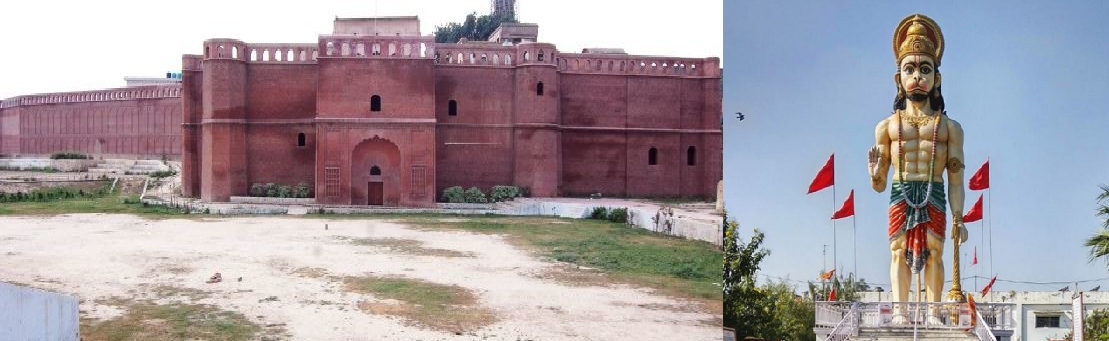
Farukhnagar is a historic town located in the Gurugram district of the state of Haryana. It is situated in the south-western part of the district and is well connected to nearby areas such as Gurugram, Jhajjar and Bahadurgarh. Farukhnagar was established in the year 1732 by Faujdar Khan, a nobleman in the Mughal court during the reign of Mughal Emperor Farrukhsiyar, after whom the town was named.
Historically, Farukhnagar was an important center for the salt trade during the Mughal period. Salt produced in the surrounding regions was collected and traded through this town, making it a significant commercial hub in northern India. Due to this flourishing trade, the town gained prosperity and developed into an important settlement.
One of the most prominent historical landmarks of Farukhnagar is the Sheesh Mahal, which was built by Faujdar Khan. The palace is known for its beautiful Mughal architecture and intricate mirror work. Apart from Sheesh Mahal, the town also has several historical gates and structures that reflect the architectural heritage of the Mughal era.
Farukhnagar also holds cultural and historical importance as it was once surrounded by protective walls and gates, which were built for the safety of the town during ancient times. The presence of old monuments and heritage buildings reflects the rich history and cultural traditions of the region.
During the British period, Farukhnagar came under British administration and continued to play an important role in the regional economy and administration. The people of Farukhnagar also contributed to the Indian freedom struggle, showing courage and determination during difficult times.
Presently, Farukhnagar is developing as an important town in the Gurugram district of Haryana. The town is known for its historical monuments, cultural heritage, and growing urban development. It remains a place of historical pride and cultural significance for the people of the region.
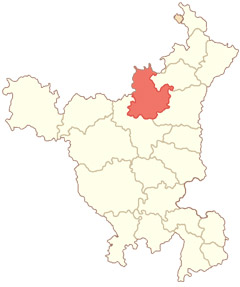
History
Farrukhnagar is a historic town in the Gurugram district of Haryana, known for its rich heritage, Mughal-era architecture, and historical salt trade. The town has played an important role in regional administration and commerce for more than 300 years.
1. Foundation of the Town (18th Century)
Farrukhnagar was founded in 1732 AD by the Mughal noble Faujdar Khan, who was a governor under the Mughal emperor Muhammad Shah.
The town was named “Farrukhnagar” in honor of the Mughal emperor Farrukhsiyar.
During this period the town was developed as a fortified settlement with gates, palaces, mosques, baolis (stepwells), and markets.
2. Salt Trade and Economic Importance
In the 18th and 19th centuries, Farrukhnagar became famous for its salt trade. Salt extracted from nearby saline lands was transported to major markets including Delhi and other parts of northern India.
Because of this trade, the town became an important commercial center.
3. Role in the Revolt of 1857
During the Indian Rebellion of 1857, the local ruler Ahmed Ali Khan supported the revolt against the British East India Company.
After the British suppressed the revolt, Ahmed Ali Khan was captured and executed in Delhi, and the princely rule of Farrukhnagar ended.
4. British Period
After 1857, Farrukhnagar came under direct British administration.
The importance of the town gradually declined as trade routes changed and nearby urban centers such as Gurugram developed.
5. Post-Independence Era
After India’s independence in 1947, Farrukhnagar became part of the state of Haryana (formed in 1966). The town developed as a municipal area and today functions as an administrative and residential town within the Gurugram district.
6. Heritage and Tourism
Farrukhnagar still preserves several historical monuments, such as:
Sheesh Mahal – a Mughal-era palace known for mirror work
Farrukhnagar Fort – the historic fort complex
Ali Ghosh Khan Baoli – a large stepwell used for water storage
Old havelis and gates built during the Mughal period
These structures reflect the architectural and cultural heritage of the town.
The Vedas are considered the most ancient scriptures not only of the Aryans but of the entire human race. These sacred texts are regarded as treasure houses of knowledge and provide valuable information about the early history, culture, lifestyle, and beliefs of ancient civilizations. Through these scriptures, historians and scholars gain insight into the geography, rivers, villages, flora, fauna, and the social structure that existed during those ancient times.
Scholars have proposed different theories regarding the period of composition of the Rigveda, one of the oldest sacred texts of India. Some historians believe that the Rigveda was composed around 1200 B.C., while other Indian scholars suggest that its origins may be much older. Renowned scholars such as Lokmanya Bal Gangadhar Tilak and Dr. Baldev Upadhyaya have presented various interpretations based on astronomical, geographical, and archaeological evidence, suggesting that Vedic civilization existed thousands of years earlier than previously believed.
The region of present-day Farukhnagar, located in the Gurugram district of Haryana, lies within the historically significant cultural belt of northern India. This region has been influenced by ancient civilizations that flourished in the plains of northern India and contributed greatly to the development of Indian cultur and traditions.
Over centuries, the region witnessed the development of various settlements and trading centers. Farukhnagar itself gained prominence during the Mughal period, when it was established by Faujdar Khan in 1732 during the reign of Mughal Emperor Farrukhsiyar. The town gradually evolved into an important administrative and commercial center, especially known for its salt trade and strategic location.
The cultural heritage of Farukhnagar reflects the influence of ancient traditions, medieval architecture, and later Mughal and British administrative developments. Historical monuments such as Sheesh Mahal and the remains of old gates and stepwells demonstrate the architectural richness of the region and highlight the historical importance of the town.
Today, Farukhnagar stands as an important historic town in the Gurugram district of Haryana. Its heritage, culture, and historical landmarks continue to reflect the long historical journey of the region and the contributions of its people to the broader cultural legacy of northern India.
The historical importance of Farukhnagar can be understood through various historical records and regional traditions. Although many ancient scriptures describe the cultural and spiritual heritage of northern India, the region where Farukhnagar is located has also been influenced by these ancient traditions and historical developments.
Over time, this region became an important part of the cultural and historical landscape of northern India. Many scholars and historians have studied the traditions, settlements, and historical evolution of towns in this area, which reflects the continuity of civilization and culture from ancient to medieval times.Farukhnagar gained particular prominence during the Mughal period when it was established in the year 1732 by Faujdar Khan, a nobleman in the court of the Mughal Emperor Farrukhsiyar. The town was developed as an administrative and commercial center and soon became famous for its salt trade, which contributed greatly to the prosperity of the region.
The town also became known for its architectural heritage, including the historic Sheesh Mahal, which reflects the beauty and craftsmanship of Mughal architecture. Several old gates, step wells, and other structures in Farukhnagar represent the rich cultural and historical traditions of the region.
During the later Mughal and British periods,Farukhnagar continued to remain an important regional center. The town preserved its cultural identity and historical importance while gradually evolving with time.
Today, Farukhnagar is recognized as an important historic town in the Gurugram district of Haryana. Its heritage buildings, historical monuments, and traditional culture reflect the long historical journey of the region and the legacy left behind by earlier generations.